3.87 kg. Two segregation errors. One source, named.

The most accurate way to trace waste to its source.

The WasteTracker Terminal weighs, reads and photographs every bag - turning weight, source, waste type and image into operational data you can act on.

Get a quote.

Every bag knows its story.

Six points on the record, from the factory to final treatment.

Produced.

Material and manufacturing CO₂e, logged before delivery.

Delivered.

Codes assigned to a source, a zone and a waste type.

Filled.

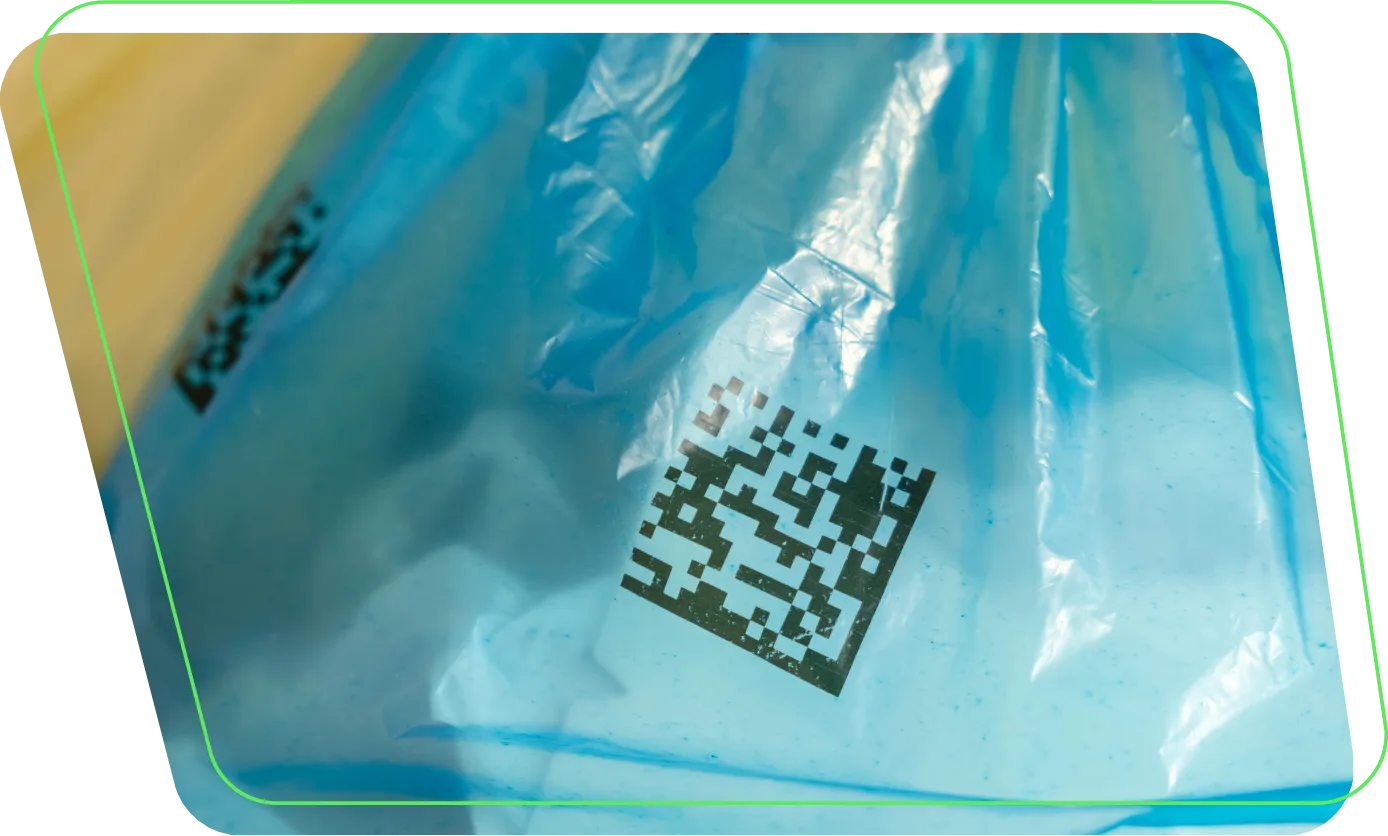
Transparent film. Nothing hidden, nothing opened.

Recorded.

One scan at the Terminal. Operator and timestamp attached.

Analysed.

Misplaced items found and named. Contamination flagged.

Treated.

Treatment data from the collector closes the loop, so CO₂e is calculated across the whole journey.

The TraceBag method.

Collecting the data is the easy part. Knowing what to do about it is not. Four steps take you from one photograph to one change worth making.

A coded, transparent TraceBag beside the WasteTracker Terminal

See.

What is actually inside. Recorded, not estimated.

Trace.

Which source it came from. One bin, one day.

Understand.

Where segregation breaks down, and how often.

Change.

Fix the cause, not the average.

What you get back.

Higher segregation rates, lower CO₂e and lower hauling costs - because every finding points to a source, not an average.

Composition by waste type.

The real breakdown behind every reported stream.

Contamination over time.

Whether it is habit, season, or one bad shift.

Source and zone benchmarks.

Who is doing this well, and who needs help.

Bag and bin rightsizing.

Fill weights that tell you what to order and how often to collect.

Who it is for.

The same evidence, answering a different question depending on who is asking.

Corporate occupiers.

Sustainability and workplace managers.

A building average will not survive an ESG audit.

  • Report your own footprint, not the landlord's average.
  • Settle the question everyone asks: does our sorting survive the cleaner's round?
  • Isolate bio, catering or any single waste type you'd like to track.
Office buildings.

Facility and administration managers.

Segregation rates plateau and nobody can say why.

  • Name the tenant, the floor, the kitchen or the bin point.
  • Fix the specific places that fail, instead of arguing about a building-wide average.
  • Cut costs by raising the segregation rate where it actually breaks.
Shopping centres.

Mall directors and technical managers.

Many sources, many waste rooms, often more than a hundred tenants.

  • Find the few sources behind most of the problem.
  • Bring evidence to service-charge conversations.
  • Catch a rejected load before the hauler does.

See it in the waste room.

45 minutes on site. We look, we say what we would start with, and you decide.

Book a site visit.

Questions.

What is actually inside the bags?

One conversation is enough to show what TraceBag adds to the waste reporting already in place.